Wild mammals
Carcass feeding brings wild habits to captive lions
An Australian study finds that serving whole animal carcasses on a feast and fast routine prompts zoo lions to mirror wild behavioral cycles.
Reported by ScienceDaily · · 2 min read
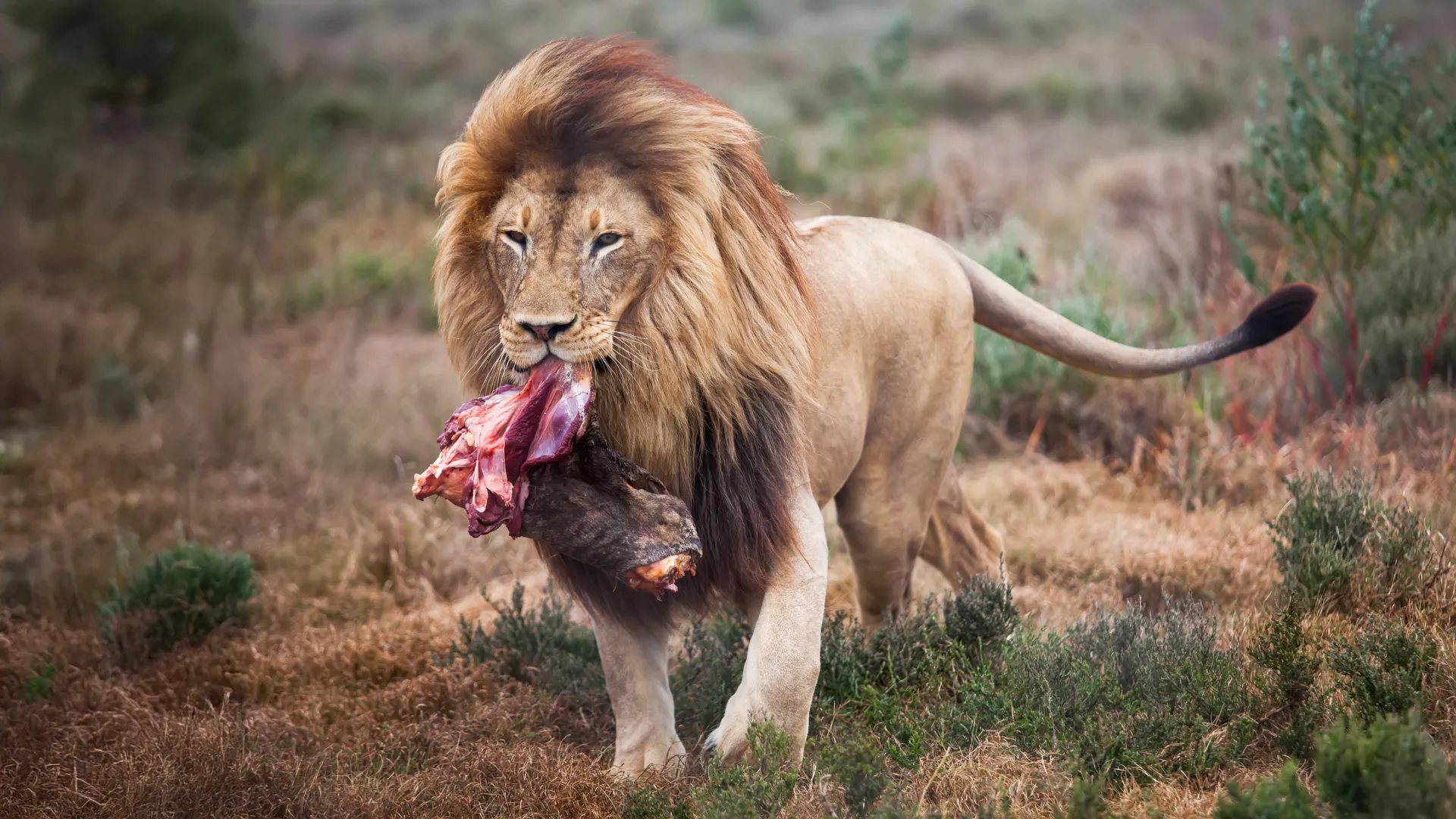
Providing whole carcasses on an intermittent feeding schedule encourages captive lions to act much more like their counterparts in nature, according to research conducted in Australia. The study investigated how carnivores in human care respond when their diet and schedule mimic wild feast-and-fast rhythms rather than predictable daily meals.
Investigators from Adelaide University partnered with Monarto Safari Park in South Australia to examine three adult male African lions. Caretakers introduced roughly 200 kilograms of animal carcasses every nine days into an existing cycle of eating and fasting, leaving the meat accessible for up to three days before fasting resumed.
Eight infrared cameras tracked the group continuously across three months, capturing comprehensive day-and-night records of their activities. When presented with whole prey, the males spent nearly triple their usual duration eating. They fed at greater frequencies and engaged in sustained physical efforts such as ripping, dragging, and handling the food.
Following these prolonged meals, the big cats entered extended periods of lying down and resting. Their physical movement slowly climbed again as the fast progressed, creating an activity cycle that closely paralleled natural wild rhythms. Researchers noted that the method caused no rise in social conflict or aggressive encounters among the males.
Anticipation and routine
The investigation also measured pacing, an action frequently associated with anticipation in captive predators. While pacing edged up slightly during the project, it did not climb in tandem with the duration of fasting. Peak pacing instead coincided with routine keeper arrivals and movements between habitat sections, suggesting habit and expectations drove the conduct rather than hunger.
Study co-author Alexandra Whittaker pointed out that zoo evaluations frequently focus solely on the brief window directly following a meal. She emphasized that feeding routines alter actions over multiple days, making broader behavioral tracking essential for understanding carnivore welfare.
Looking ahead, researchers suggest pairing round-the-clock behavioral observations with biological markers to better evaluate how varied dietary strategies influence the long-term well-being of zoo animals.